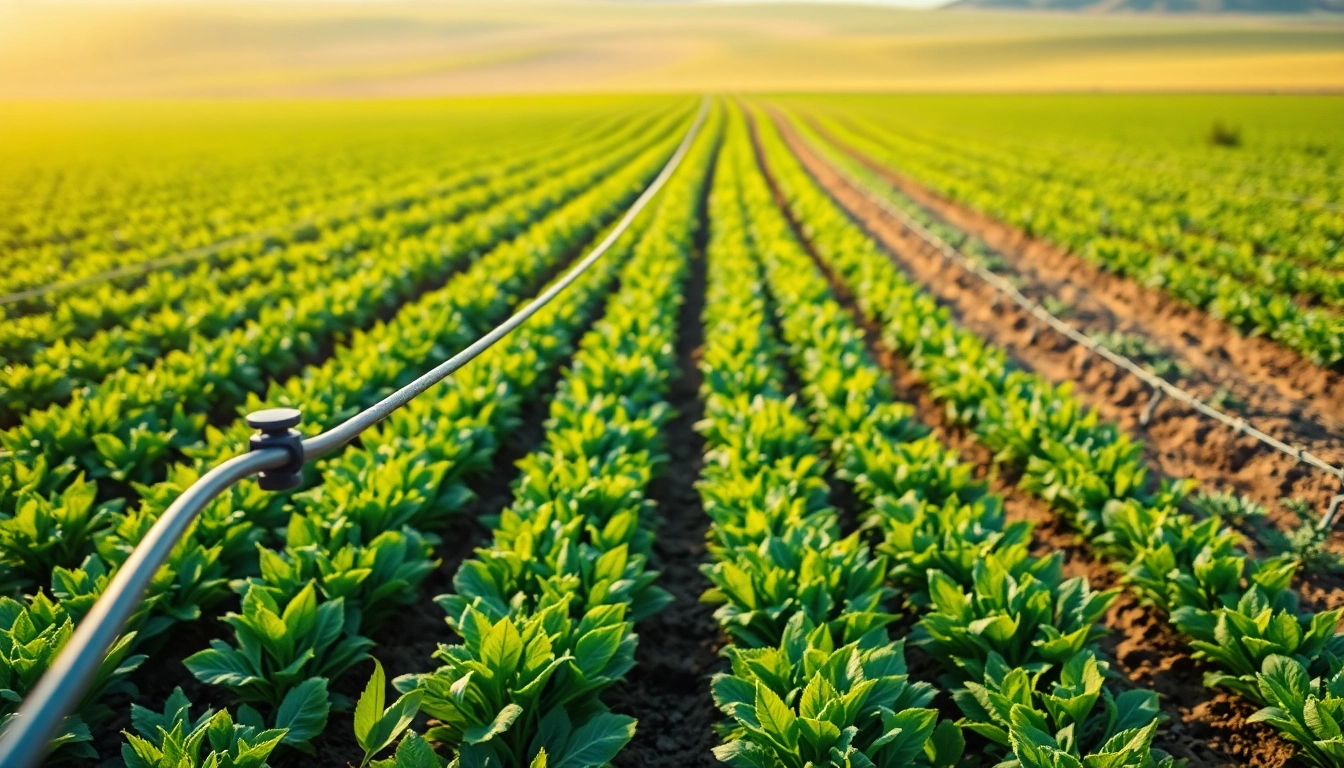
Understanding Land Irrigation
What is Land Irrigation?
Land irrigation refers to the artificial application of water to soil for the purpose of assisting in the growth of agricultural crops. It is a crucial agricultural practice, especially in regions where rainfall is insufficient or irregular. Techniques and methods of land irrigation vary widely, from surface flooding to advanced systems like drip and sprinkler irrigation. Effective land irrigation can dramatically increase crop yields and support sustainability in food production by ensuring plants receive the necessary moisture to thrive.
Importance of Land Irrigation
The significance of land irrigation cannot be overstated. As the global population continues to increase, the demand for food rises correspondingly. Land irrigation plays a pivotal role in maximizing crop production by controlling the moisture levels in the soil, mitigating drought effects, and enhancing food security. Furthermore, effective irrigation systems contribute to soil conservation and can improve water management, ensuring that water is used efficiently while supporting the overall health of ecosystems.
Types of Land Irrigation Techniques
Different land irrigation techniques can be employed based on the terrain, soil type, and crop requirements:
- Surface Irrigation: This traditional method involves flooding the field with water. It is often used in flat terrains.
- Drip Irrigation: This efficient system delivers water directly to the soil at plant roots through a network of tubing, which minimizes water wastage.
- Sprinkler Irrigation: Mimicking natural rainfall, this system sprays water over crops from above, suitable for varying soil types.
- Subsurface Irrigation: Water is applied below the soil surface through a network of buried pipes, leading to reduced evaporation and improved water efficiency.
- Center Pivot Irrigation: A mechanized system that rotates around a fixed point, distributing water uniformly over large areas.
Common Challenges in Land Irrigation
Water Management Issues
Effective water management is a consistent challenge in land irrigation. Over-irrigation can lead to waterlogging, while under-irrigation can cause crop stress. It's critical to monitor both soil moisture levels and water usage to optimize irrigation schedules. Implementing modern technologies, such as soil moisture sensors and automated irrigation systems, can assist in addressing these challenges by providing real-time data that helps farmers manage their resources effectively.
Soil Considerations
The type of soil plays a significant role in how water is absorbed and retained. Sandy soils tend to drain quickly, requiring more frequent irrigation, whereas clay soils hold moisture longer but may not drain efficiently. Understanding the unique properties of soil types enables farmers to tailor their irrigation methods to improve effectiveness and sustainability. Regular soil testing and analysis can provide insights into nutrient levels, pH balance, and organic matter content, all of which influence irrigation strategies.
Environmental Impact of Irrigation
While land irrigation is critical for crop production, it can also lead to ecological consequences. Over-extraction of water resources can strain local ecosystems, reduce biodiversity, and affect the natural water cycle. Additionally, poor irrigation practices can exacerbate soil salinization and lead to land degradation. It is essential to implement environmentally sustainable practices and technologies that minimize negative impacts while promoting the longevity of irrigation systems.
Best Practices for Efficient Land Irrigation
Implementing Smart Irrigation Systems
Smart irrigation systems utilize advanced technology to optimize water usage. These systems can include programmable timers, soil moisture sensors, and weather-based controllers that respond to environmental conditions. By mimicking natural rainfall patterns and ensuring precise watering, these systems reduce water wastage and contribute to healthier crop production. Implementing smart systems aids in conserving water resources and can lead to significant cost savings for farmers.
Scheduling and Timing for Irrigation
Proper scheduling of irrigation is essential for maximizing efficiency and crop yield. Factors to consider include crop growth stages, prevailing weather conditions, and soil moisture levels. Irrigating during cooler parts of the day, such as early morning or late evening, can minimize evaporation. Additionally, crop-specific water requirements should influence the frequency and volume of irrigation, ensuring that crops are not over or under-watered.
Technology in Land Irrigation
Advancements in technology have transformed land irrigation practices by introducing various precision irrigation techniques. Emerging technologies, such as satellite imagery and drones, enable farmers to monitor crop health and irrigation effectiveness from above. The integration of data analytics allows for informed decision-making regarding irrigation practices, enhancing efficiency and productivity on farms. Furthermore, mobile applications have enabled farmers to control irrigation systems remotely, promoting manageable and flexible irrigation solutions.
Examples of Successful Land Irrigation Projects
Case Study: Drip Irrigation Implementation
A notable success story in land irrigation is the implementation of drip irrigation systems in arid regions. For instance, a large-scale drip irrigation project in the Middle East demonstrated a significant increase in water use efficiency by up to 80%. This method not only minimized water wastage but also increased crop yields by ensuring consistent moisture levels at the root zone. Farmers involved in this project reported higher profitability and sustainability in their agricultural practices.
Lessons Learned from Land Irrigation Trials
Trials conducted across various climates and soil types have provided valuable insights into the optimal strategies for water application. Key lessons learned include the importance of understanding local conditions, the economic benefits of investing in technology, and the necessity of promoting sustainable practices among farmers. These trials have highlighted the significance of adaptive management strategies that evolve as climate conditions change and water availability fluctuates.
Innovative Land Irrigation Techniques
Innovation in land irrigation continues to evolve with techniques such as rainwater harvesting, which collects and stores rainwater for later use in irrigation. Additionally, the adoption of hydroponics and aquaponics, which require minimal water and land usage, is growing in popularity. These practices not only conserve water but also promote the efficient use of space and accelerate crop growth cycles. Exploring these innovations enables farmers to maintain productivity while minimizing resource depletion.
Measuring the Success of Land Irrigation
Key Performance Indicators for Irrigation
Measuring the success of land irrigation practices involves evaluating several Key Performance Indicators (KPIs). These metrics include water use efficiency, crop yield per unit of water, and soil moisture levels. Additionally, assessing financial returns on irrigation investments and the impact on crop quality are vital indicators of a successful irrigation program. Employing these metrics allows farmers and stakeholders to gauge the effectiveness of their irrigation strategies and make necessary adjustments.
Evaluating Crop Yield Improvements
Monitoring crop yield improvements is essential to understanding the effectiveness of irrigation practices. It’s essential to compare yields before and after implementing new irrigation techniques. Case studies show that adopting precision agriculture can enhance crop yield significantly. By analyzing data related to water application methods and timing, farmers can identify best practices that lead to optimal production and economic benefit.
Future Trends in Land Irrigation Metrics
Future trends in land irrigation metrics are leaning towards comprehensive data analysis and automation. The integration of artificial intelligence and machine learning will likely enhance irrigation efficiency by predicting water needs accurately based on historical data and environmental conditions. This data-driven approach not only improves resource management but also helps in long-term planning for climate change impacts on agriculture.
Frequently Asked Questions (FAQs)
What is the most efficient irrigation method?
Drip irrigation is often considered the most efficient method, as it delivers water directly to the plant roots, reducing evaporation and runoff.
How does irrigation affect soil health?
Proper irrigation can improve soil health by maintaining moisture levels, while improper practices can lead to salinization and erosion.
Can irrigation contribute to water scarcity?
Yes, if not managed properly, excessive irrigation can lead to groundwater depletion and contribute to overall water scarcity in the region.
How often should I irrigate my crops?
Irrigation frequency depends on the type of crop, soil conditions, and weather. Monitoring soil moisture can help determine optimal irrigation schedules.
What technologies are emerging in land irrigation?
Emerging technologies include soil moisture sensors, satellite imaging for crop monitoring, and automated irrigation systems that adjust based on weather data.