
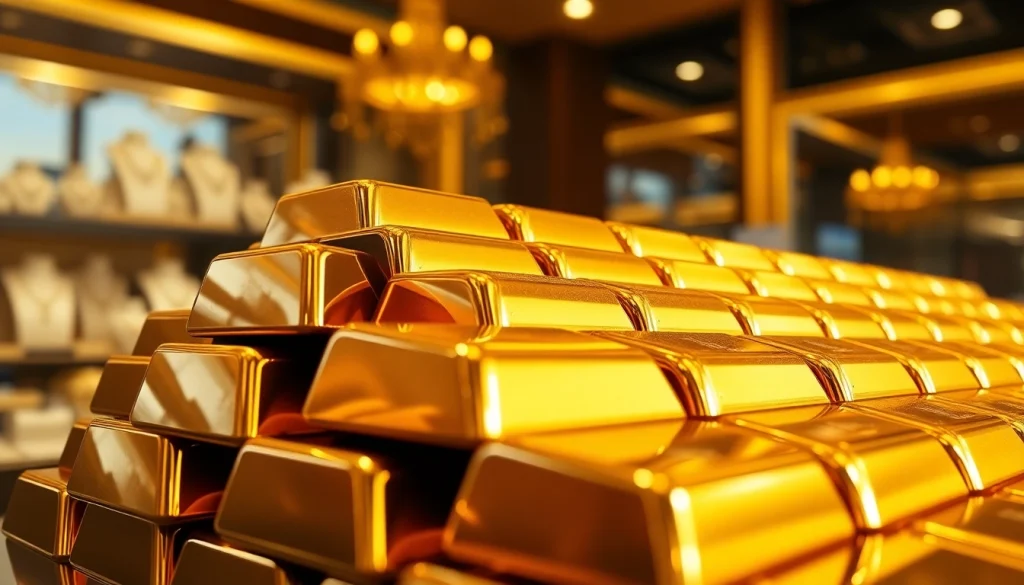
Introduction to Gold and Its Significance
Gold, a symbol of wealth, prestige, and economic resilience, has captivated humanity for centuries. This precious metal holds a unique place in various cultures and economies worldwide. Understanding gold is crucial, not just for investors, but for anyone interested in the dynamics of global economic markets. In the quest for information related to gold, we delve into its history, scientific properties, investment potential, and market dynamics.
Historical Context of Gold
Gold’s significance dates back to ancient civilizations such as the Egyptians, who revered it as a divine metal. Historically, it has been used in currency, jewelry, and as a standard for measuring wealth. Gold’s malleability, luster, and resistance to tarnishing made it an ideal medium for crafting artifacts, awards, and ornaments. Over the millennia, gold has been involved in trade routes, wars, and cultural exchanges, cementing its role as a fixture in human history.
Gold as a Symbol of Wealth
For centuries, gold has been synonymous with wealth and status. Royalty adorned themselves with gold jewelry, while nations hoarded it to secure their financial stability. In contemporary society, gold remains an attractive asset class for investors looking to hedge against inflation and currency fluctuations. It also stands out as a unique gift, often used in major life celebrations such as weddings and anniversaries.
Understanding Gold in Different Cultures
Across cultures, the significance of gold changes, showcasing its universal appeal yet distinct meanings. In India, for instance, gold is deeply integrated into cultural practices and is often associated with prosperity and good fortune. In contrast, western societies often view gold primarily as a financial investment. In places like Africa, gold plays crucial roles in cultural rituals and economic systems, highlighting both its beauty and intrinsic value in local economies.
The Intriguing Science Behind Gold
Chemistry of Gold: Properties and Uses
Gold, with the chemical symbol Au, is a dense, malleable, and ductile metal that has been used for various applications. Its atomic number is 79, and it is one of the least reactive chemical elements, resistant to corrosion and oxidation. Due to its exceptional conductivity and appearance, gold finds applications beyond jewelry and currency, including electronics and aerospace engineering.
How Gold is Mined and Processed
The process of gold mining is complex, often involving several steps. Gold is extracted from the earth through various methods, including panning, hard rock mining, and by the use of cyanide in the extraction process. After mining, the ore undergoes crushing and milling, followed by chemical treatments to liberate the gold from impurities. The final step is refining, where gold is purified to reach a more than 99.5% purity level, qualifying it as investment-grade gold.
Environmental Impact of Gold Mining
While gold mining brings economic benefits, it also has significant environmental impacts. The extraction process can lead to deforestation, water pollution, and soil degradation. As regulations and environmental awareness increase, sustainable mining practices are being developed to mitigate these effects, such as using less harmful chemicals and restoring mining sites post-extraction.
Investing in Gold: A Smart Option?
Why Invest in Gold
Investing in gold is often seen as a safe haven during economic downturns. Its historical performance suggests that it retains value, especially during inflationary periods or times of geopolitical uncertainty. Gold acts as a diversifier in investment portfolios, helping to reduce risk and enhance potential returns when combined with other asset classes.
Different Forms of Gold Investments
Investors can choose from various gold investment avenues: physical gold (coins, bars), gold exchange-traded funds (ETFs), gold mining stocks, and gold mutual funds. Each option has its unique benefits and drawbacks. Physical gold provides tangible ownership but requires storage and insurance, while ETFs and stocks offer liquid investments without storage concerns.
Evaluating Risks and Returns in Gold Investments
While gold can be a lucrative investment, it is essential to understand the associated risks. Price volatility, market demand fluctuations, and currency value changes can impact returns. Historical data shows that gold prices can rise or fall dramatically based on global economic conditions. Investors should conduct thorough research, perhaps consulting financial experts, to evaluate their risk tolerance before investing.
The Market Dynamics of Gold
Current Trends in the Gold Market
Recent macroeconomic developments have influenced gold prices significantly. Analysts observe how interest rates, inflation rates, and geopolitical tensions affect market sentiment. The resurgence of digital currencies also introduced competition for gold as a store of value, though gold’s physical properties continue to make it a preferred investment for many.
Factors Influencing Gold Prices
Gold prices are influenced by a combination of supply and demand, global economic conditions, and investor behavior. Key factors include inflation rates, interest rates, and currency strength, particularly the US dollar. Additionally, physical demand from sectors like jewelry production and electronic manufacturing can sway market prices. Supply disruptions, due to geopolitical or environmental factors, also lead to price fluctuations.
How to Read Gold Price Charts Effectively
Reading gold price charts effectively requires understanding technical analysis and market indicators. Investors should familiarize themselves with chart patterns, moving averages, and volume trends. Recognizing support and resistance levels can help make informed trading decisions. Online platforms provide real-time data and analysis tools, making it easier to track gold prices over time.
Frequently Asked Questions about Gold
How much is gold per ounce today?
The price of gold fluctuates constantly based on market demand and conditions. As of the latest data, the price is approximately $4,015.35 per ounce. Always check a reliable financial source for the most current rates.
What are the best ways to invest in gold?
Investors can invest in gold through physical assets, ETFs, gold mining stocks, and mutual funds. Each method has unique risk and return profiles that suit different investment strategies.
Is gold a good long-term investment?
Gold has historically maintained its value over time, making it a compelling long-term investment. While prices may fluctuate, its role as a hedge against inflation and economic instability adds to its appeal.
How does gold compare to other investments?
Unlike stocks or bonds, gold holds intrinsic value and does not rely on economic performance. It’s often used as a buffer during downturns, while traditional assets may lose value. Thus, gold diversifies investment portfolios.
What is the historical value trend of gold?
Gold prices have generally increased over the decades, reflecting its rising demand and strategic importance. Major events like financial crises or geopolitical tensions tend to drive spikes in prices, showcasing its role as a safe haven.